
So if building for people first is the obvious move, why isn’t everyone doing it?
Because the model most businesses follow was never designed for that.
It was designed for something else entirely, in a world that worked differently.
And you’ve probably been using it without ever questioning where it came from.
I guarantee you’ve heard of it. Most business people talk about it like it’s water.

The Funnel
The marketing funnel is actually quite a simple concept.
You do whatever it takes to bring people to the top of the funnel.
You “convince” them you’re good.
You create urgency and scarcity so there’s no choice but to buy by exiting the thin end.
A simpler way to think about it is that the journey the customer goes through is linear.

They start at one end, move through the predetermined steps, and exit at the other.
But you and I both know that’s not how people actually work.
They land on your homepage. Click to your contact page. Jump to your services. Leave with the vague idea that they’ll come back later to send you an email.
Maybe they do. Maybe they don’t.
People don’t explore things linearly. They explore how it feels right for them.
You can’t force someone to follow the exact journey you want them to take. The best you can do is hope they eventually get to the end.
So already this concept seems outdated for how modern society actually behaves.
But I haven’t even told you the crazy part yet.
This funnel idea was created in 1898 by American advertising pioneer Elias St. Elmo Lewis.
Over 100 years ago.
Elias built this concept as a way to help businesses understand what they should work on. And at the time, it made perfect sense.
You really only had local newspapers and a handful of radio stations to advertise in.
The flow of customers was genuinely linear.
Predictable.
Think of it like a water jug you could carry with you. You controlled the pour. You knew roughly how many people would see your message.
The audience and your competition was limited to your geographic area.
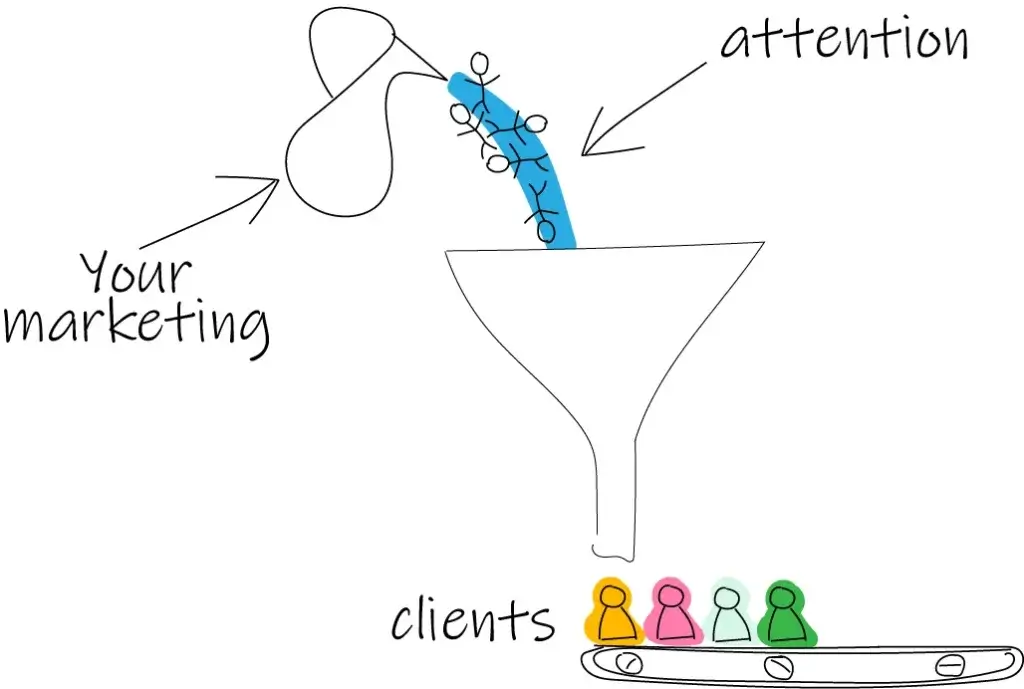
It was manageable. And it worked.
But that’s not how the world works anymore.
The Waterfall Problem
Today’s flow of prospects and attention isn’t a jug you control. It’s a massive waterfall you’re trying to capture with a funnel.
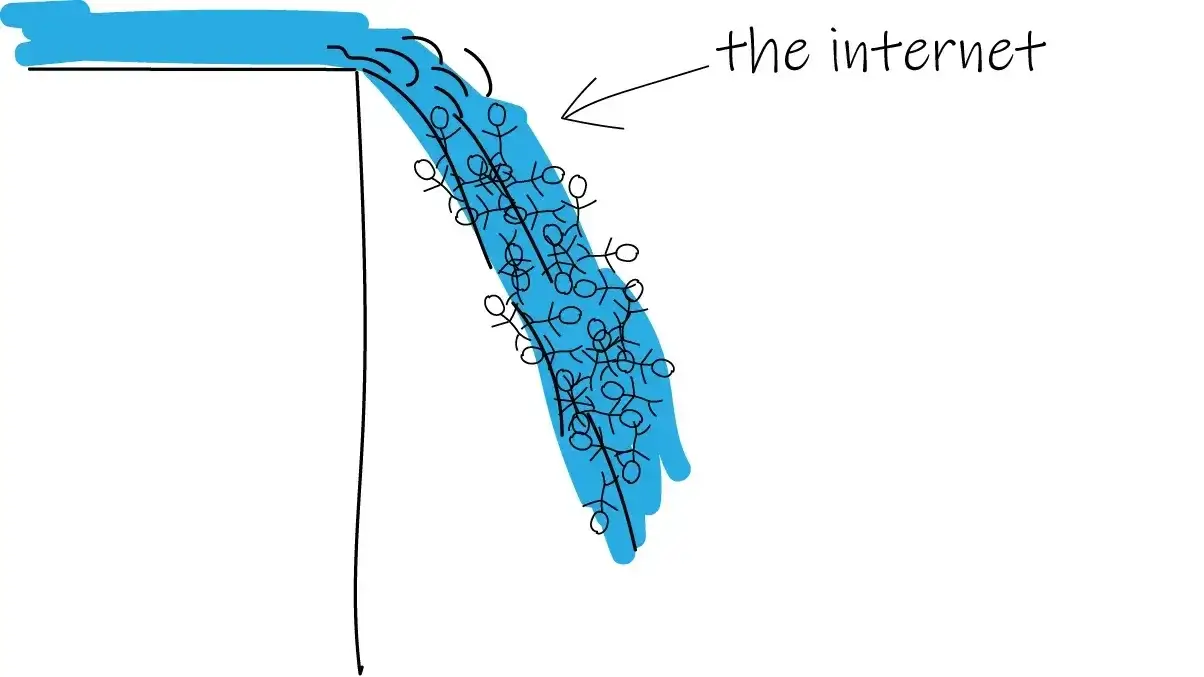
The internet didn’t just expand your reach. It fundamentally changed the nature of attention itself.
Because of the internet allowing the entire world to potentially see you, you also have the entire world as your competition vying for that same attention.
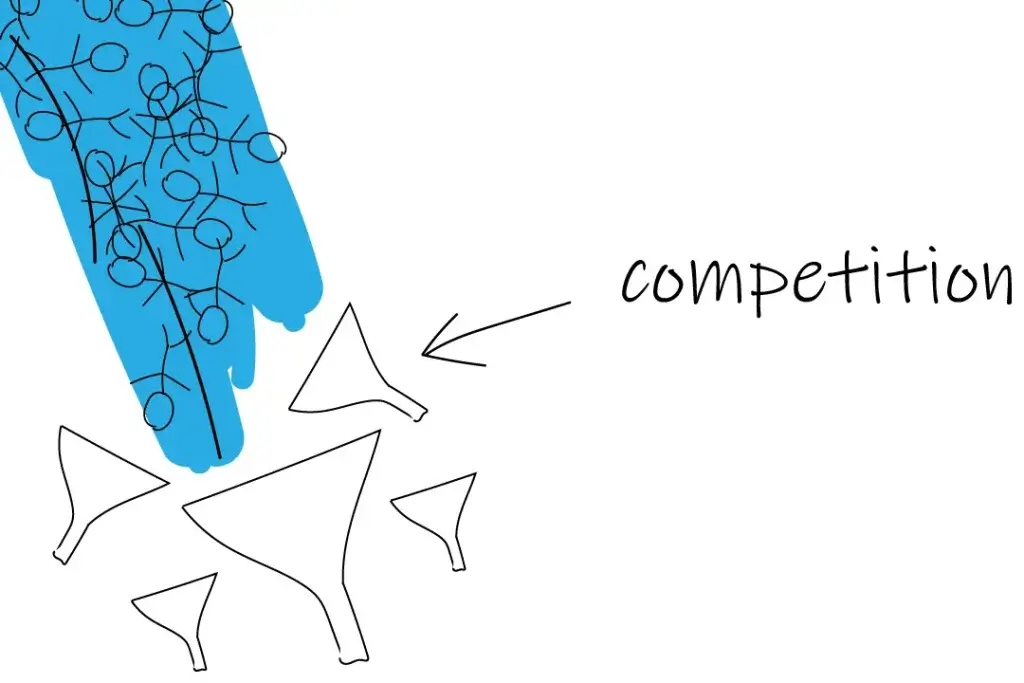
This creates an unsustainable dynamic:
You feel constantly out of your depth.
Everyone is bunching up at the bottom, trying to capture as much attention as they can before it flows past because of how strong the current is.
It’s a losing battle.
If you’re lucky enough to be close to the source of water, your funnel will fill up quickly and spill out.
The amount of clients you get won’t change because the funnel at the thin end can only handle so much volume.
Many businesses start lowering prices just to grab the overflow. (the attention that couldn’t fit into someone else’s funnel)
You see the competition going for this low-hanging fruit, so you copy what appears to be working. And suddenly it’s turned into a race to the bottom.
Here’s the other problem: this waterfall is static.
It’s out there in the distance, compared to the water jug you could carry with you 100 years ago.
You feel like you have to constantly go get it. Chase it. Compete for every drop.
The internet fundamentally changed how marketing works. How the flow of attention and consideration happens. How people explore and make decisions.
We’re using a 126-year-old model designed for a completely different world.
No wonder it feels exhausting. No wonder you have to enter into “marketing mode”.
We’re trying to force a linear funnel onto a non-linear reality. Trying to control the strength of a waterfall with a plastic funnel. Trying to win a game that was designed for an entirely different playing field.
The dissonance you feel isn’t because you’re doing it wrong.
It’s because the model itself is misaligned with how the world actually works now.
What we need isn’t a better funnel. We need a fundamentally different model.
One that fits the reality of how people actually explore, connect, and make decisions in a world of infinite choice and non-linear journeys.