
We all know Nike and their famous slogan, “Just Do It”.
What’s funny is that every time I see a commercial or a poster from them, I never seem to see the price of their shoes.
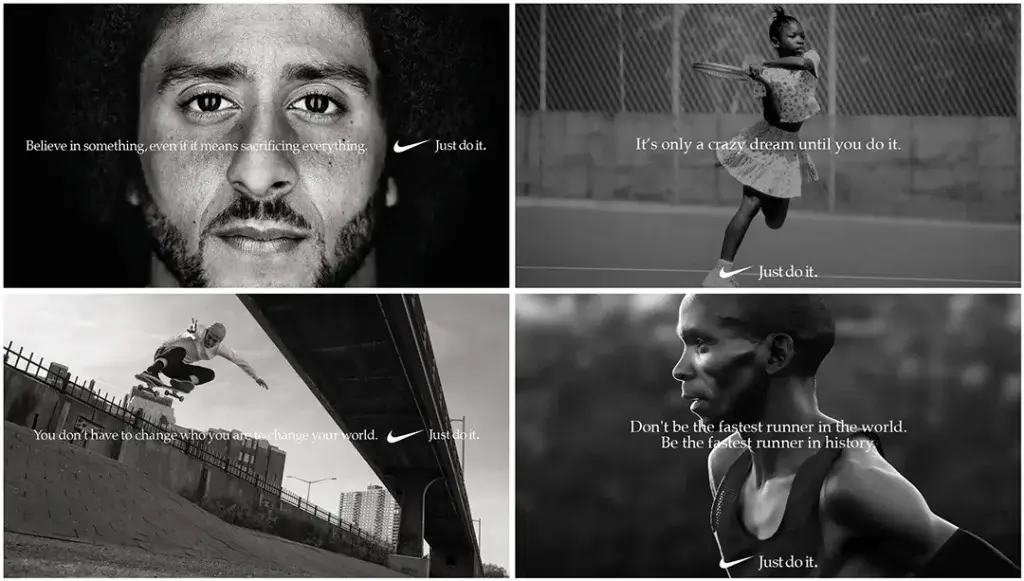
Their marketing revolves around championing the human spirit. They’re saying: we see your struggle, we believe in your potential, we’re on your side.
Their ads inspire and makes me want to learn more about an athlete’s story.
Their website then adapts to their marketing campaign.
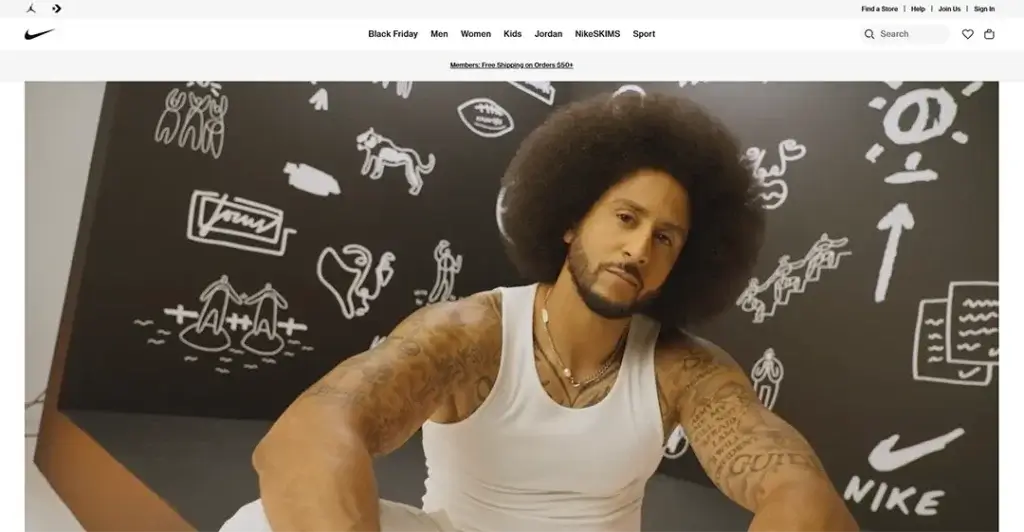
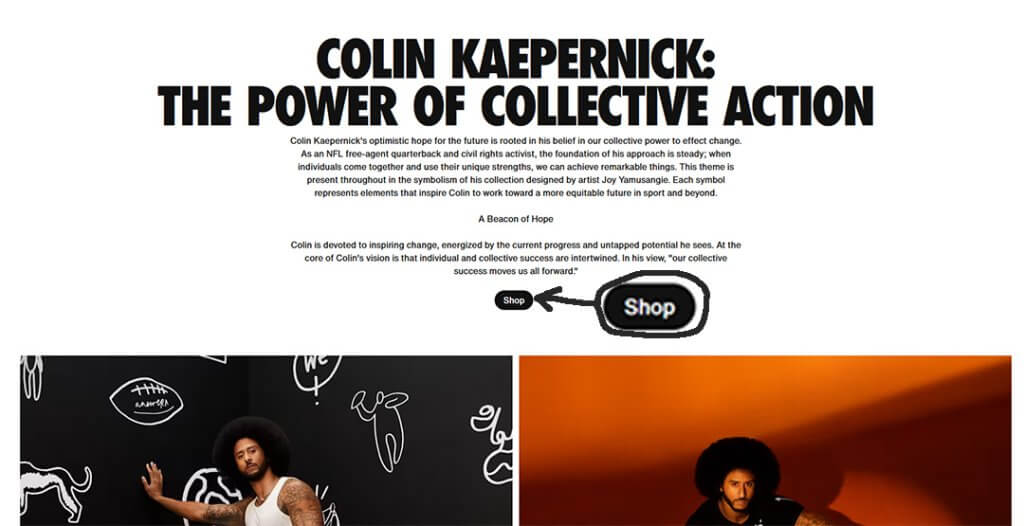
Their other marketing channels do the same.
And as you browse and learn more, you’ll eventually find their products.
Apple, while under the influence of Steve Jobs, created their iconic ads around a simple idea, revolution.
They were about choosing different, because you are different. Going against the status quo and being a rebel in the eyes of the average.
Steve himself does a remarkable job explaining why:
So people chose Apple because they wanted to feel different. All Apple had to do was make different a reality.
Their message was baked into their products by design, and that made owning one special for the people that resonated with their values.

Now I should say that I’m not for or against the business practices of these companies, but their marketing reflects a completely different approach from the one you’re used to.
Marketing not geared towards fear based manipulation or selling, but mattering to someone.
Notice what Nike and Apple actually built their worlds on.
Not products. Not features.
Not competitive positioning.
Values.
Nike cared about human perseverance. Apple cared about individuality.
Those weren’t slogans they invented in a boardroom. They were beliefs the companies held, and the marketing became the expression of those beliefs.
That’s what made it resonate.
You can feel the difference between a company performing its values in an ad and a company whose marketing is an honest extension of something it already cares about.
Your company has that too.
You might not have put it into words yet, but it’s the reason your best clients trust you.
It’s in the decisions you make when nobody’s watching.
How you treat the people who work for you. What you refuse to compromise on even when compromising would be easier.
Behind every interaction is a human being who, just like us, wants to shine a little brighter in the world.
I believe that. And if you’re still reading this, I think you do too.
Those things aren’t a nice-to-have you put on a wall somewhere. They’re the raw material your entire marketing should be built from.
When your marketing is built on what you actually believe, it stops feeling like a performance and starts feeling like you showed up.
That’s what I call a marketing world.
A place where people can explore and self-identify as something that matters to them, causing them to continue to be part of that world and build trust with the brand until they’re ready to buy.
A place built to build relationships online.
This, I believe, is the alternative to the marketing funnel.
The place where we can treat people like people, and attract the right customers who are a natural fit to who we are and what we choose to do.
We should be building marketing worlds instead of funnels, because we are world builders every day of our lives.
World Building 101
But I know what you might be thinking…
Nike has billions of dollars and a global brand. Apple had Steve Jobs.
What does that have to do with my business?
Everything. Because you already do this. You just don’t do it in your marketing yet.
What do you do when you first meet a potential customer?
They might start by asking about your background first, or jump straight to their problem.
Sometimes they want to hear about other clients you’ve helped.
Sometimes they need to understand your process before anything else feels relevant.
You follow their lead. You listen for what matters to them. You share the story that addresses their actual concern, not the one you planned to tell.
Somewhere in that winding, non-linear conversation, trust develops.
Not because you engineered it.
Because it emerged naturally from two people exploring whether there’s a fit.
That’s world-building.
In-person it happens naturally, it’s instinctual.
But online, in our marketing, it feels like learning how to speak a new language.
Building a world is based on your values, your experiences. Who you are as a person, how you choose to serve others.
From everything that you know and understand, you are able to speak to customers a certain way in-person.
And you know deep in your gut the minute you click with someone else.
The conversation flows easily, they have the same sense of humour, or similar experiences, or like the same things.
You naturally attract the right people, because relationship building is like gravity.
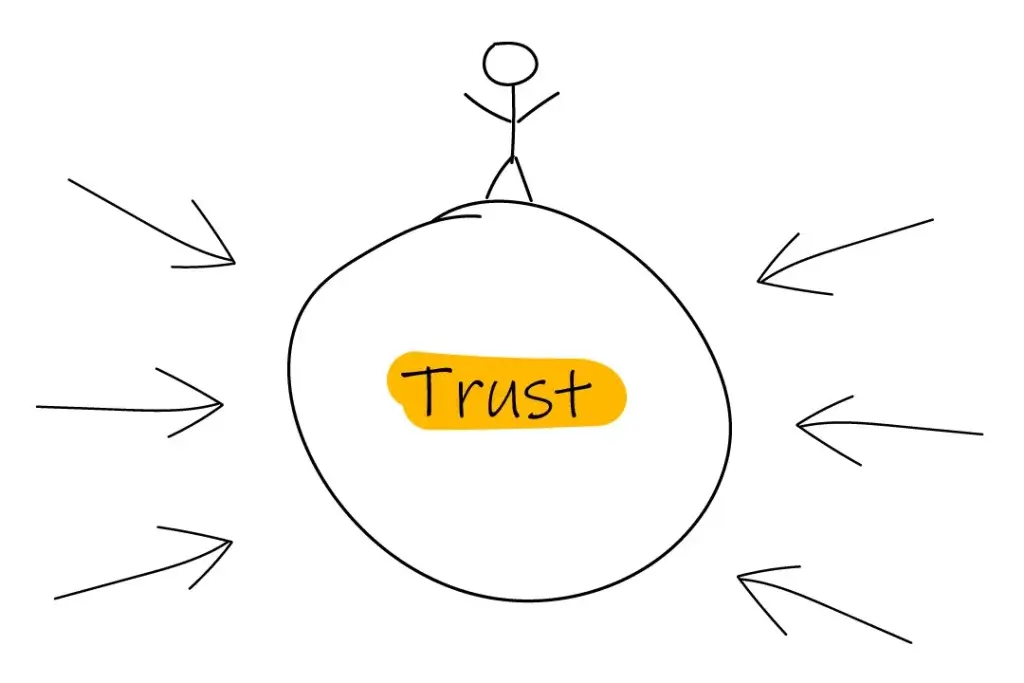
you can’t see it, you can’t pinpoint exactly why, but you know the second you want to get to know someone more.
Think of driving on a rainy day.
Raindrops falling from the sky and hitting the side of your car.
If you’re not the one driving, and you’re anything like me, you sometimes pick a raindrop and slowly watch it move little by little to the ground.
It start at the top of the window, and gravity slowly pulls this one rain drop down.
On the way, it makes these twists and turns, collecting other raindrops on the way but it never seems to be in a straight line.

It zigs and zags, and depending on how windy or how fast the car is going, it might exit sideways.
But it always finds the ground.
In our marketing, our job is to create a world with gravity, where no matter where people go, they always find the ground.
In our case, our ground is a reason to buy from us.
People can explore our website however they way, they can go to social media, see our poster in a magazine, and sign up to our newsletter.
It should all end up by finding the same ground.
None of this requires coercion or fear-based manipulation.
The right people explore your world because they want to.
And for them, there’s only one way it ends up.
But building this online isn’t instinctual the way it is in person. It takes conscious decisions and thought to make marketing feel like a one-on-one conversation.
That’s where strategy comes in.