We live in strange times.
When the internet first came out, it promised worldwide connection. Human interaction at scale. The democratization of voice and opportunity. A way for anyone, anywhere, to share their gifts with people who needed them.
Yet somewhere along the way, something fundamental shifted.
Marketing, which should be about creating meaningful exchanges between people, became increasingly mechanical. Algorithmic. Extractive.
Businesses started treating people as data points in spreadsheets. As targets to acquire and segments to exploit.
The entire apparatus of modern marketing seems designed around a singular objective: extract value as quickly as possible before moving on to the next victim.
And I use that word deliberately. Victim.
This creates a profound paradox. We have more tools than ever to connect with people, yet connection has never felt more elusive. We can reach anyone instantly, yet meaningful relationships seem harder to build.
We know more about our audiences than ever before, yet we feel like we can’t reach them.
We feel more alone and disconnected than ever before.
The Loneliness of Screens
The loneliness epidemic has become so severe that both the United Kingdom and Japan have instituted ministers of loneliness.
Government positions dedicated to combating what has become a public health crisis.
Think about that for a moment.
We live in the most connected era in human history, yet governments are creating entire departments to address the crushing isolation people feel…
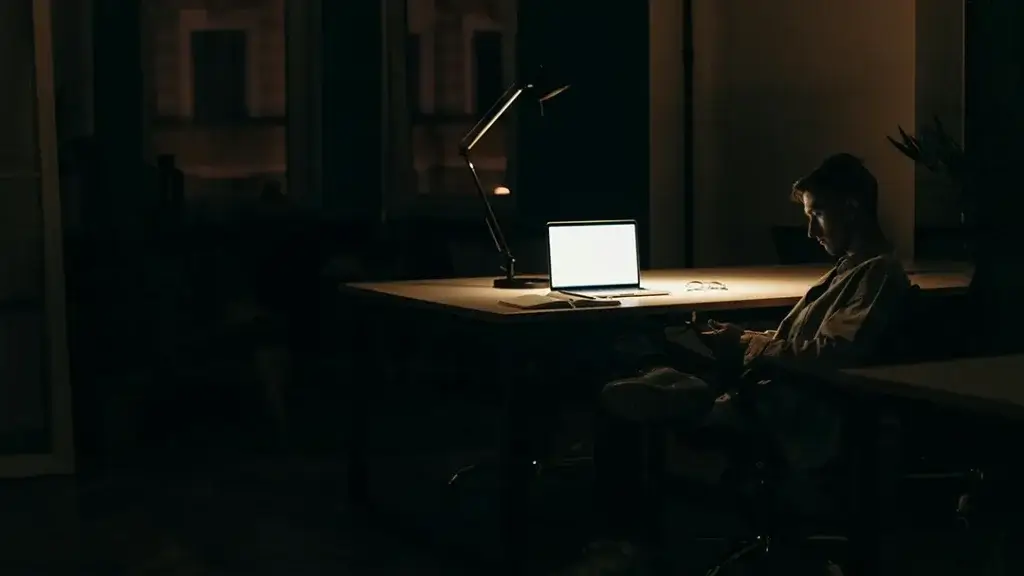
The internet has fundamentally shifted how we relate to people online, transforming connection into something conscious rather than unconscious.
In person, relating to others happens naturally. It’s unconscious.
We read body language, tone, facial expressions. We adjust instinctively. We build trust through a thousand tiny signals we’re not even aware we’re processing.
Online, all of that disappears.
Instead, we must consciously construct every aspect of how we present ourselves and relate to others.
Every word is chosen. Every image is curated. Every interaction is mediated through screens and algorithms.
We can be anything online, so who do we choose to be?
Marketing, a tool used by businesses to generate trust, became the ultimate expression of this conscious relating.
The deliberate exercise of connecting with people through digital channels. But here’s where things went wrong:
Instead of using this conscious relating to create more authentic connection, businesses started using it to optimize for extraction. To manipulate. To coerce.
Because they could be anything online, and all you needed was enough people to believe it.
They studied the mechanics of human psychology not to serve people better, but to exploit them more efficiently.
The result is a digital landscape where people feel increasingly isolated despite being surrounded by other people’s “content.”
Where marketing has become synonymous with manipulation.
Where the very tools meant to bring us together have driven us further apart.
This disorientation runs deeper than tactics or channels. It’s a fundamental misalignment between the systems we’ve built and the humans those systems are meant to serve.
We’ve taken the conscious act of digital relating and turned it into something cold. Mechanical. Inhuman.
And we wonder why people feel so alone…
My Marketing Journey
I started Lobo Media Marketing in 2018, leaving corporate marketing behind with a young family depending on me.
It was terrifying.
But something deeper kept pulling me forward. A persistent sense that I was in the wrong place, building the wrong things.
You see, I’ve always been fascinated by how people think. How they make decisions. What makes them care deeply about some things while remaining indifferent to others.
In high school, I became the unofficial counselor. Friends, and the friends of my friends would find me during recess, and share their school age troubles with me.
I’d listen (as much as high schooler can) and help them think through their problems. My high school counselor noticed this and worked with me to help others.
When it was time to graduate and go to university, she pushed me toward studying psychology.
So I did. Learned about human behavior, motivation, decision-making. And somehow ended up in marketing where I could apply all the things that fascinated me.
But corporate marketing revealed something unsettling to me. Nobody seemed to care about people. Not really.
We were always rushing. Trying to maximize revenue. Optimizing aesthetics.
There was never discussion about whether people would actually like what we were creating. Only whether it would make them more money.
This created a profound dissonance in me.
Marketing was supposed to be about understanding humans. About helping people find solutions to their real problems. About creating connections that mattered.
I spent almost ten years trying to reconcile this dissonance, reading about psychology and neuroscience, listening to the world, experimenting with different approaches. Gradually, a framework emerged, one I now call Human Marketing.
The core realization of my journey is that marketing is fundamentally a creative act.
Not manipulation. Not coercion. Not optimization.
It’s storytelling.
It’s taking people on a journey that helps them understand not just what you offer, but why it matters to them. Why it matters to their lives, their work, their relationships.
In the same way filmmakers craft experiences that make you feel something about the stories they’re telling, marketing is the business equivalent of artistry.
And this re-frame changes everything.